how to manage hotel room turnover cleaning
At a glance: Aligna provides how to manage hotel room turnover cleaning in Hong Kong. Send the cleaning scope, location or floor area, current-condition photos and preferred time by WhatsApp for a scope-based quotation.
TL;DR
Managing guest room turnover cleaning in Hong Kong hospitality properties requires rigorous standard operating procedures, timing coordination, and detailed sanitation protocols. This guide outlines professional approaches for structuring turnover schedules, coordinating housekeeping teams, managing linen and surface hygiene, and preparing accurate service briefs for commercial cleaning providers. By establishing systematic checklists and clear communication workflows, property managers can streamline guest arrivals, uphold hygiene standards, and optimize operational efficiency across urban hotels and serviced apartments.
how to manage hotel room turnover cleaning: service focus
The hospitality sector in Hong Kong operates under intense pressure, where guest satisfaction and room occupancy rates depend directly upon the speed, precision, and consistency of guest room turnover. In high-density urban districts ranging from Central and Admiralty to Tsim Sha Tsui, Causeway Bay, and Mong Kok, hotels, boutique properties, and serviced apartments experience rapid check-out and check-in cycles. Understanding how to manage hotel room turnover cleaning effectively is essential for property managers seeking to minimize vacancy windows while upholding rigorous hygiene and aesthetic standards. Without a structured operational framework, housekeeping teams often encounter bottlenecks, leading to delayed arrivals, compromised sanitisation depth, and elevated operational stress.
Effective turnover management begins with a comprehensive understanding of the spatial and temporal dynamics inherent in Hong Kong accommodations. Compact room layouts, dense architectural configurations, and tight service lift schedules require meticulous logistical planning. Housekeeping supervisors must harmonize cleaning sequences so that high-touch surfaces, bathroom sanitisation, linen replacement, and floor care proceed in an unbroken, logical progression. By replacing ad-hoc cleaning habits with standardized procedural workflows, facilities can achieve predictable room readiness times regardless of daily occupancy fluctuations.
When how to manage hotel room turnover cleaning may be relevant
Property operators and facility supervisors frequently evaluate turnover workflows during specific operational scenarios. Periods of high seasonal tourism, major convention exhibitions at the Hong Kong Convention and Exhibition Centre, and holiday surges place extraordinary demands on housekeeping resources. Furthermore, boutique hotel expansions and the onboarding of new serviced apartment inventory require robust standard operating procedures to establish baseline cleanliness standards from day one.
Implementing structured turnover protocols is equally critical during management transitions, staff training phases, or when upgrading internal quality assurance mechanisms. When cleaning teams face compressed turnaround windows between a morning check-out and an afternoon check-in, structured guidance ensures that no critical sanitisation step is omitted. Establishing clear protocols allows management to maintain uniform hygiene quality across multiple guest floors without sacrificing thoroughness.
Practical planning guidance
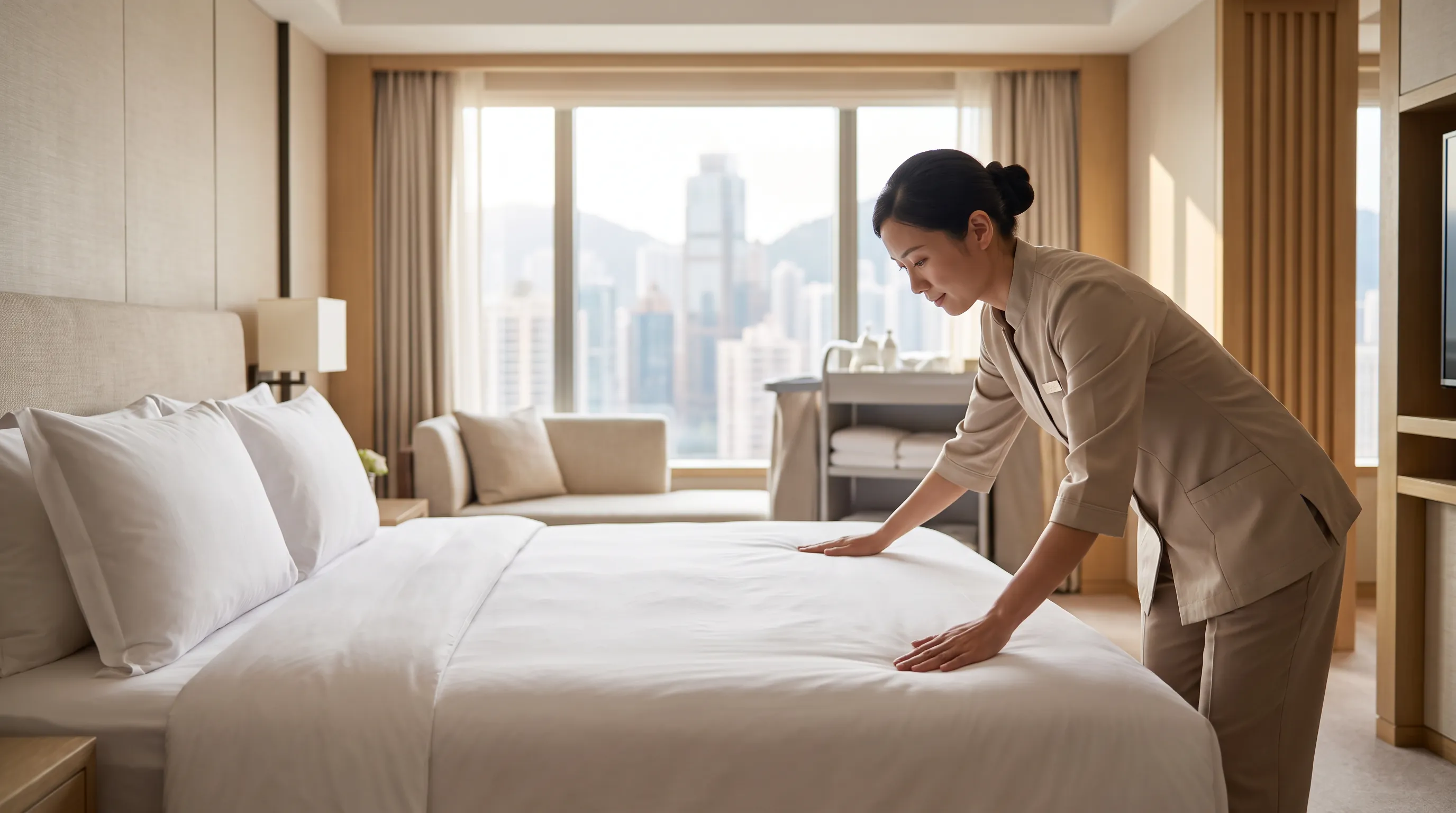
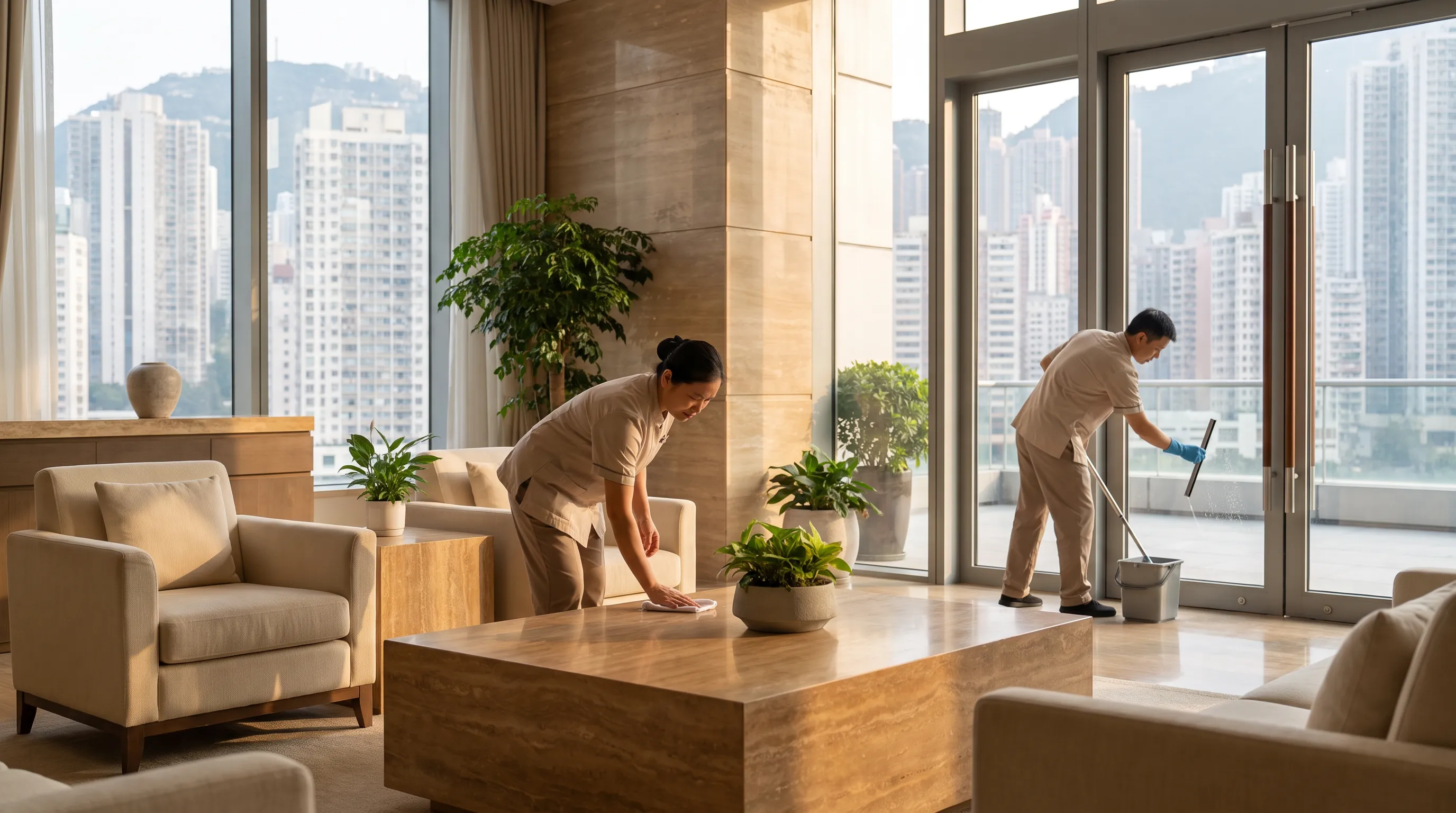
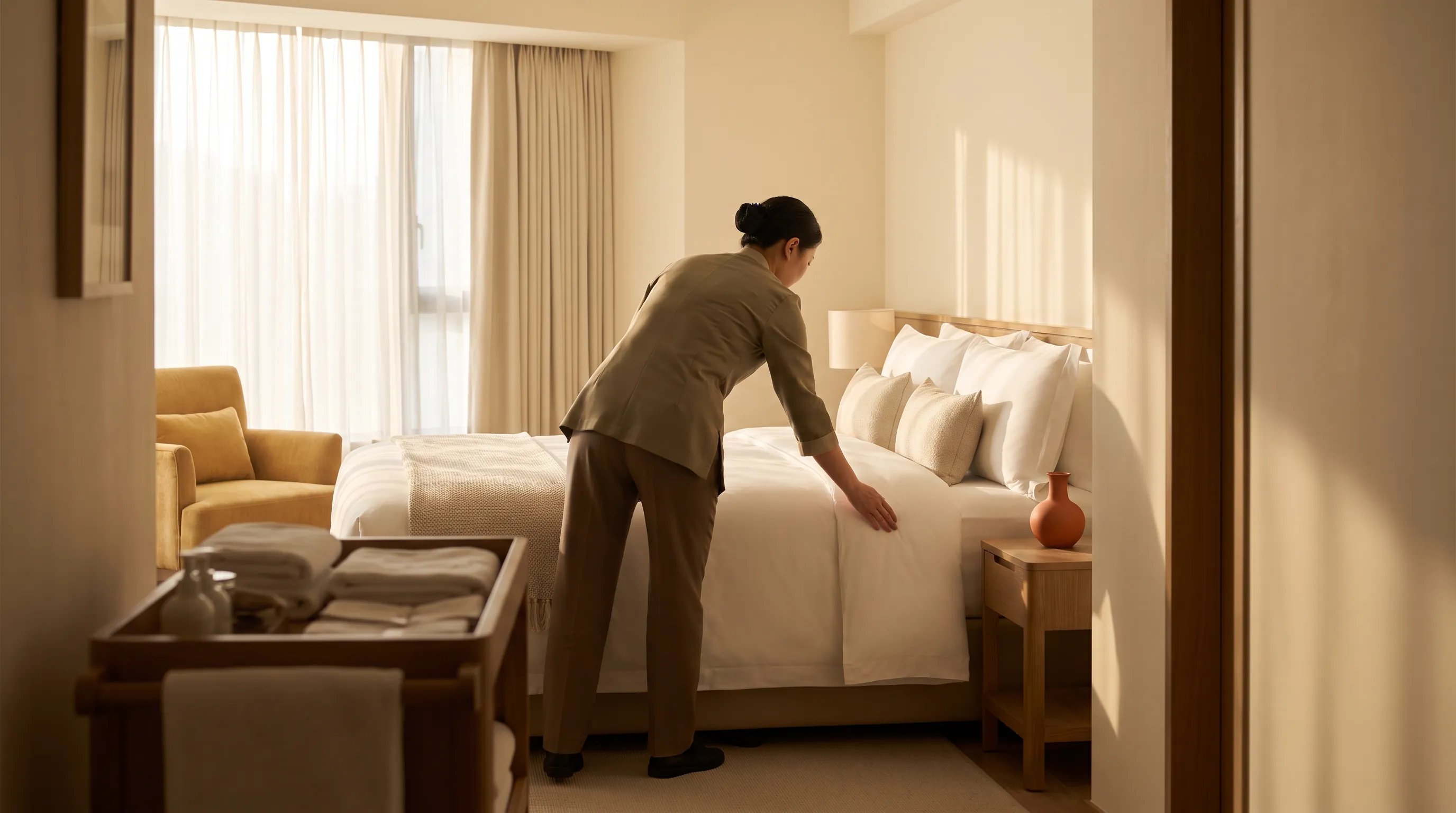
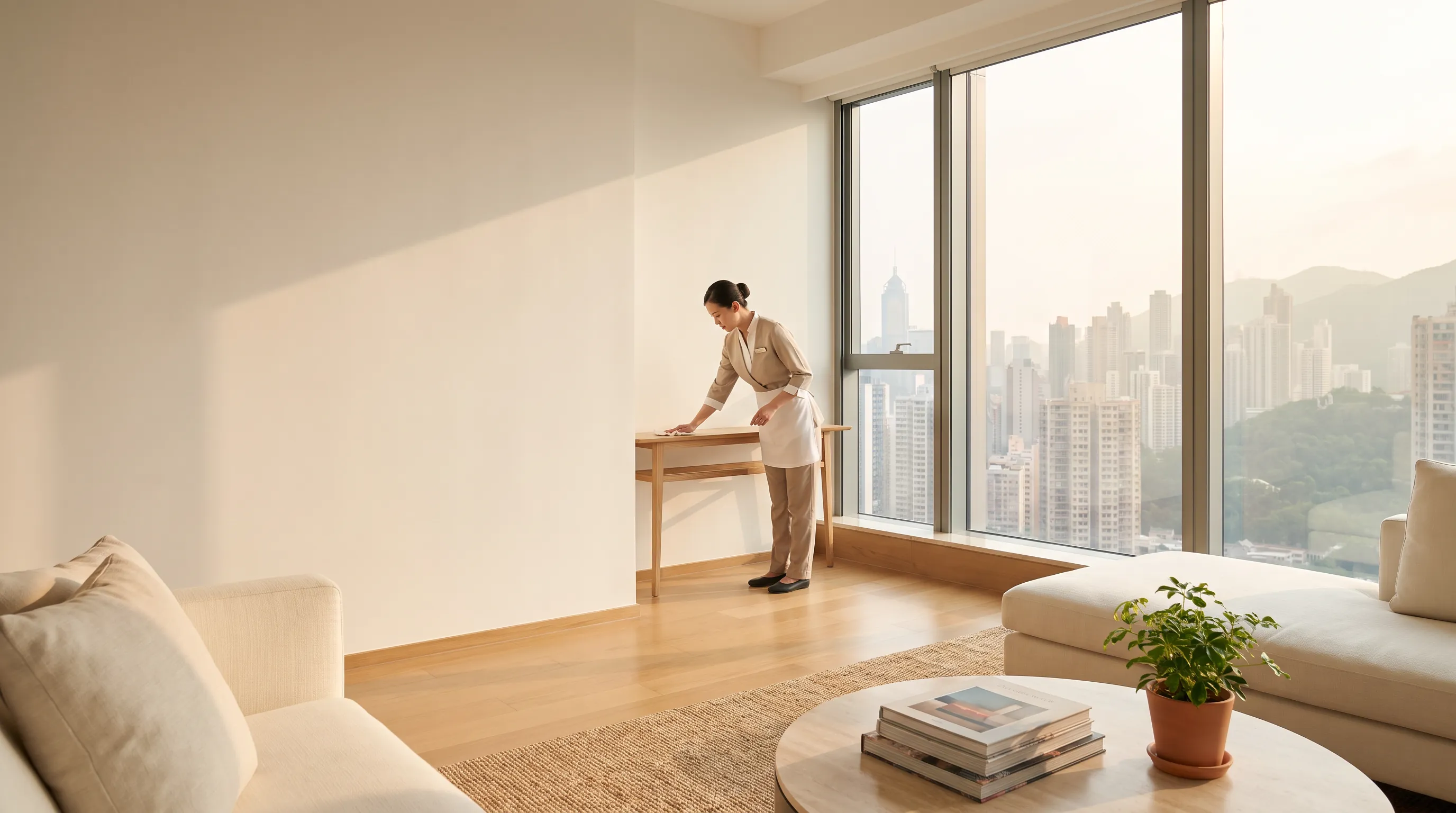
A professional approach to room turnover cleaning encompasses a meticulously structured sequence of operations designed to address every square meter of the guest accommodation. The scope begins with systematic waste clearance and linen stripping, ensuring that soiled textiles are isolated immediately to prevent cross-contamination. Housekeeping personnel then proceed to dry dusting and surface wiping, covering furniture frames, television screens, luggage racks, desks, and decorative fixtures using microfiber materials engineered to capture particulate matter effectively.
Bathroom hygiene represents one of the most critical focal points during guest room turnover. The service scope mandates rigorous cleaning and disinfection of washbasins, bathtubs, glass shower enclosures, ceramic tile grouting, and water closets. High-touch elements such as flush plates, faucet handles, shower controls, and door knobs receive targeted sanitisation using commercial-grade cleaning agents formulated to eliminate pathogens while preserving fixture finishes. Following surface disinfection, floors are thoroughly vacuumed and damp-mopped, and guest amenities—including fresh linens, bath towels, toiletries, and beverage supplies—are systematically restocked according to property specifications.
Questions to ask before booking
What to share when requesting how to manage hotel room turnover cleaning
*Service reference planning framework*: In commercial hospitality operations across Hong Kong, successful room turnover management relies on standardized time-motion allocations per room category, encompassing standard guest rooms, executive suites, and studio serviced apartments. General planning benchmarks indicate that allocating distinct time blocks for dry dusting, wet sanitisation, linen staging, and final inspection prevents cross-contamination and ensures consistent room readiness. Property managers typically integrate photographic verification sheets and structured handover logs to maintain quality control without relying on subjective assessments.
Arrange your cleaning enquiry
Before engaging commercial cleaning support for guest room turnover, property managers should conduct a thorough internal audit of their facility requirements. Key preparatory steps include evaluating average daily room turnover volumes, identifying peak check-out time clusters, mapping service lift access availability, and cataloging specific linen and amenity storage locations. Ensuring that cleaning teams receive accurate site orientation and clear access credentials prevents unnecessary delays during operational shifts.
To assist facility managers in evaluating different operational methodologies, the following comparison highlights the structural distinctions between traditional ad-hoc cleaning and systematic turnover planning:
| Operational Dimension | Traditional Ad-Hoc Cleaning | Systematic Turnover Planning |
|---|---|---|
| Workflow Sequence | Flexible, reactive cleaning based on immediate visual inspection. | Standardized, sequential room progression minimizing cross-contamination. |
| Time Allocation | Variable completion times leading to unpredictable room readiness. | Fixed time-motion benchmarks tailored to room category and size. |
| Quality Control | Subjective supervisor walk-throughs with minimal documentation. | Structured photographic checklists and digital handover verification logs. |
| Linen & Waste Handling | Manual sorting in guest rooms during active cleaning phases. | Immediate containment and segregated removal using dedicated utility carts. |
| Staff Coordination | Informal verbal instructions between housekeeping shifts. | Synchronized digital schedules and pre-assigned room distribution blocks. |
Questions to ask before booking
What to share when requesting how to manage hotel room turnover cleaning
When property managers initiate a service enquiry for room turnover cleaning support, providing comprehensive operational details ensures an accurate and responsive service scope assessment. Essential information to include in your initial briefing consists of the total number of guest rooms or serviced apartments, the average square footage per unit type, daily occupancy patterns, and peak check-out windows.
Additionally, operators should specify building access constraints, service lift operating hours, on-site storage availability for cleaning supplies, and any unique brand standards or specialized chemical requirements. Sharing current-condition photographs of standard room layouts enables cleaning coordinators to design tailored deployment schedules that align perfectly with the property's operational cadence.
Arrange your cleaning enquiry
Establishing a seamless communication channel is essential for expediting cleaning arrangements in Hong Kong's fast-moving property market. Property managers and hospitality operators can initiate their service inquiry by transmitting the cleaning scope, room inventory counts, floor area specifications, current-condition photographs, and preferred service schedules directly through our dedicated communication channels.
For rapid response and detailed scope consultation, connect with our service coordination team via WhatsApp at +852 9551 7587 or by clicking https://wa.me/85295517587. Our team reviews all operational details promptly to provide structured, transparent quotations tailored to your property's exact requirements.
Frequently asked questions
What are the core components of structured guest room turnover cleaning?
Structured guest room turnover cleaning comprises a coordinated sequence of tasks including systematic waste clearance, linen stripping, high-touch surface dusting, comprehensive bathroom sanitisation, floor vacuuming and mopping, and precise amenity replenishment. Establishing a fixed procedural order ensures uniform hygiene standards across all guest accommodations.
How can Hong Kong property managers optimize room turnover timing during peak check-in windows?
Property managers can optimize turnover timing by establishing pre-scheduled staff deployment matrices, mapping efficient service lift routes, staging linen and supplies on each floor in advance, and utilizing digital checklist verification to eliminate bottlenecks between morning check-outs and afternoon check-ins.
What operational details should be included when submitting an enquiry for room turnover cleaning support?
When submitting an enquiry, property managers should provide the exact room count, average floor area per unit, daily peak check-out schedules, building access and service lift parameters, and current-condition photos of typical room layouts to facilitate an accurate and efficient service scope proposal.
Closing WhatsApp CTA
Ready to streamline your hospitality guest room turnover operations with professional commercial cleaning support in Hong Kong? Send your room inventory, floor area details, site photos, and preferred operational schedule to our team today.
Connect with us instantly via WhatsApp at +852 9551 7587 or click https://wa.me/85295517587 to discuss your property's specific requirements and secure a tailored service quotation.
Helpful References
For further authoritative guidance on public health standards, workplace safety, and consumer rights in Hong Kong, please consult the following official resources:
- Food and Environmental Hygiene Department (FEHD) - Official public health, hygiene, and environmental sanitation guidelines in Hong Kong.
- Labour Department - Occupational safety, employment standards, and workplace health regulations.
- Consumer Council - Independent consumer rights protection and market transparency resources in Hong Kong.
*Disclaimer: The above official bodies and councils provide public guidance and regulatory standards in Hong Kong and do not endorse any specific commercial cleaning agency, contractor, or private service provider.*
Related Services
Explore related cleaning services, pricing guides, and operational resources across our Hong Kong cleaning network:
- hotel room turnover cleaning cost hong kong
- hotel room turnover cleaning faq hk
- hotel guest room turnover cleaning service hk
- hotel housekeeping services hk
- serviced apartment housekeeping outsourcing cost
Preparing a clear cleaning enquiry
A clear how to manage hotel room turnover cleaning enquiry begins with the space as it is now. A short message explaining whether the priority is a one-off visit, recurring upkeep, a handover, a hospitality area or a business premise gives the conversation a practical starting point. If how to manage hotel room turnover cleaning is part of the request, note which rooms, zones or surfaces matter most, rather than trying to describe every task in advance.
Location and access details are equally useful. Share the district, building or estate, an approximate floor area or room count, and any information that may affect entry, lifts, operating hours, management registration or handover timing. Current-condition photographs are especially helpful when there are visible areas of grease, dust, fabric use, floor traffic, kitchen or bathroom buildup, or a specific part of the space that needs attention.
Before an arrangement is discussed, it is sensible to identify personal items, fragile objects, food, equipment, stock or documents that should be moved, secured or kept outside the agreed working area. Where a surface has a material sensitivity, loose hardware, an existing defect or a condition that may sit outside ordinary cleaning scope, include that note with the photos. This keeps the discussion focused on the actual site and on the boundaries that should be confirmed before timing is arranged.
For how to manage hotel room turnover cleaning, the preferred date and time are most useful when paired with a realistic access window. You can send the service type, space details, photos and preferred timing to Aligna on WhatsApp, then review the suggested scope and any questions that need clarification. If the space is shared, occupied or subject to building procedures, include the relevant contact or access note in the same message. Service arrangements, timing and quotation details are confirmed from the information shared for the individual space.
Service reference
Use the service type, location or floor area, current-condition photos and preferred time to make the next discussion clearer.
Service reference images
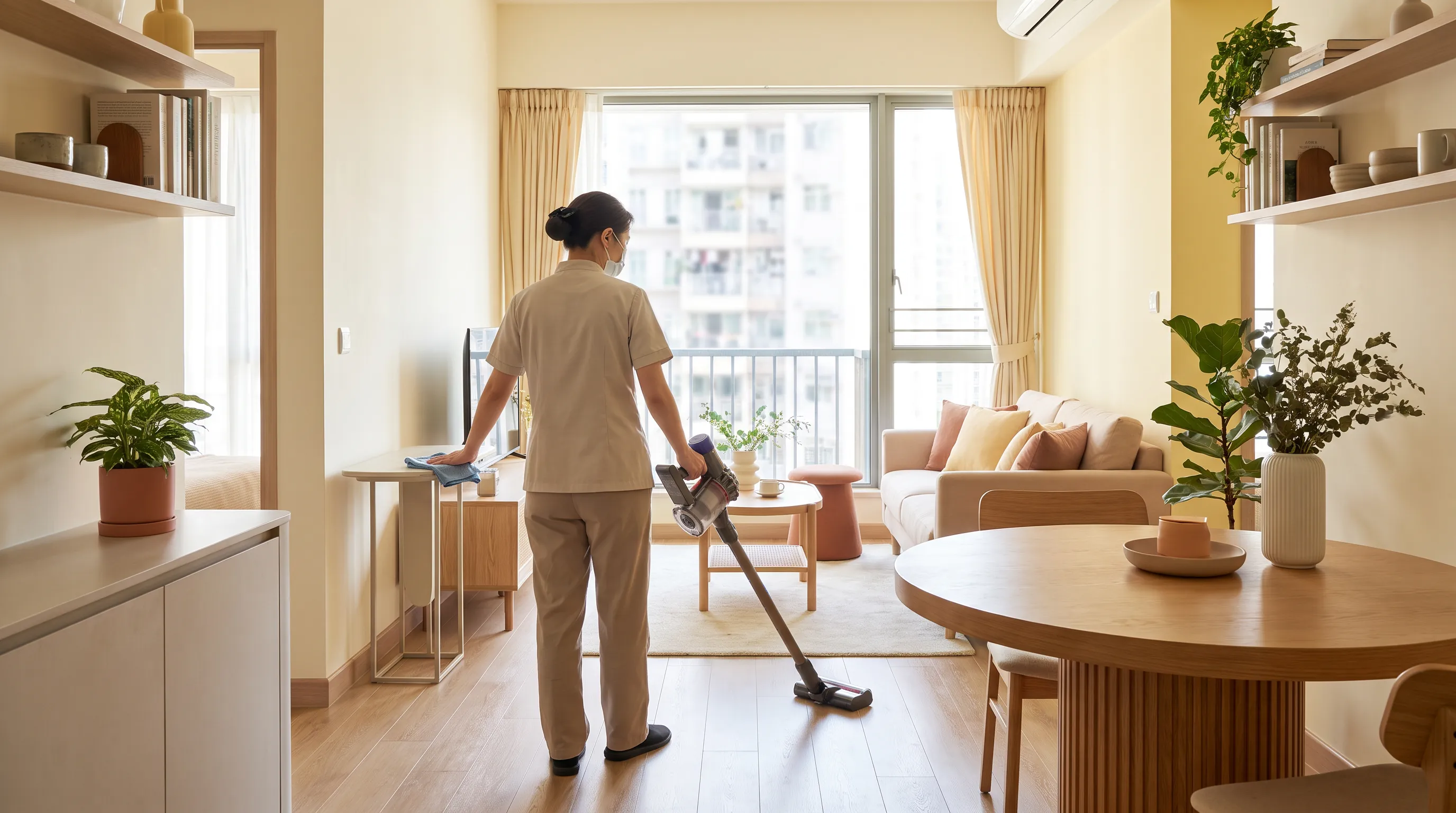
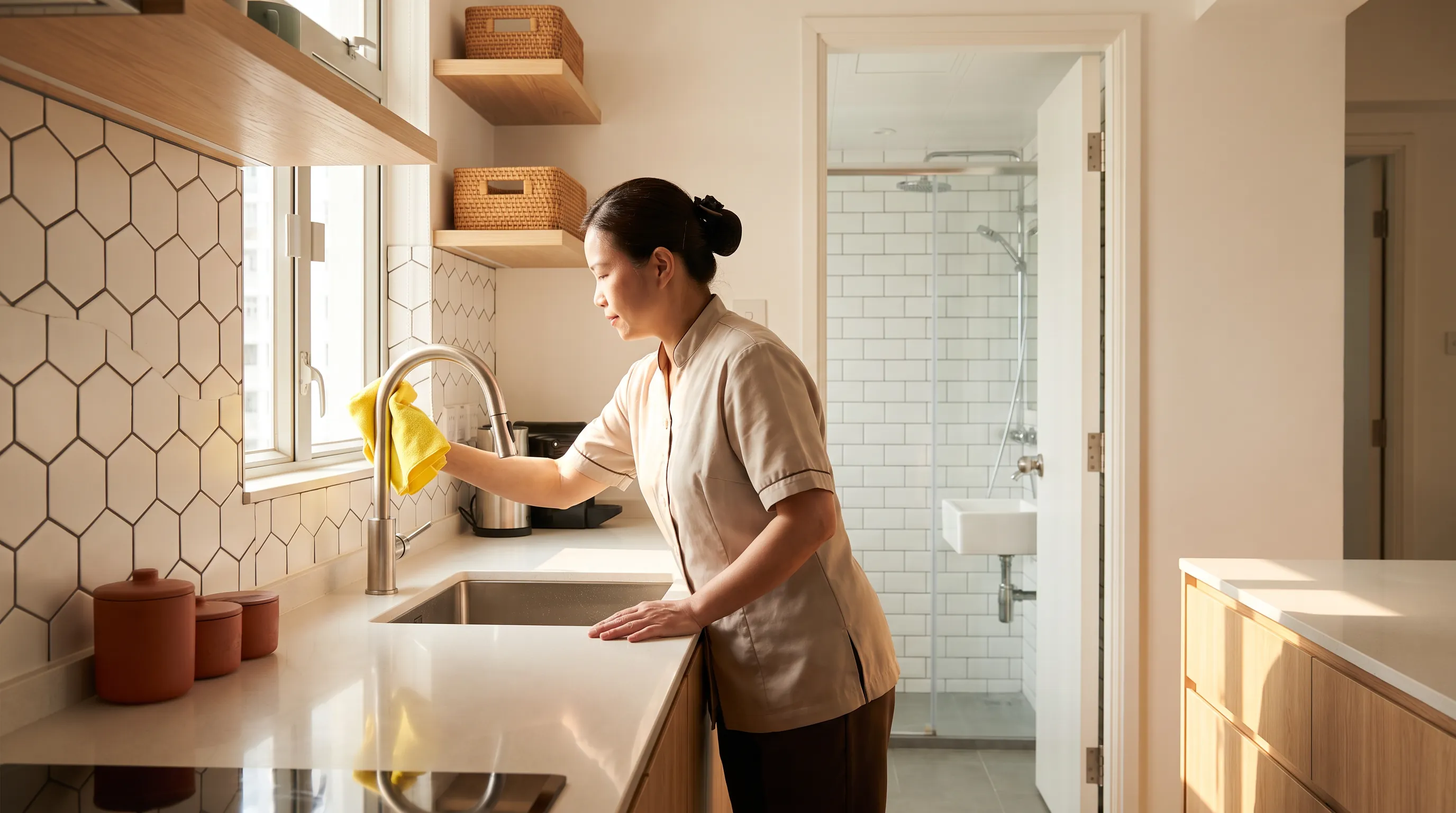
These visual references help discuss the actual space. Scope and arrangements are confirmed from the information you share.